EveryEvent Budapest

Ver Todos los Events

Find every event in Budapest

events

Concerts & Live Music
Festivals
Sports & Recreation
Food & Drink
Arts & Culture
Community
Family & Kids
Nightlife
Comedy
Theater
Destinos Populares
BaliSedonaLos AngelesCosta RicaNew YorkSan FranciscoAustinMiamiJoshua TreeTulum
Ver Todas las CategoríasVer Todos los Destinos

Explorar Todas las Características

Herramientas poderosas para hacer crecer tus eventos

Características de la Plataforma

Precios Dinámicos Inteligentes
Categorías de Entradas
Asientos Asignados
Recuperación de Carritos
Recuperación de Visitantes
Donaciones y Escala Móvil
Motor de Afiliados
Escáner de Entradas
Códigos de Cupón
Preguntas Personalizadas
Compartir Entradas
Ventas Adicionales
Análisis e Informes
Secuencias de Email
Lista de Espera / Notificar / Recordar
Explorar
Discovery HubArtists & PerformersVenuesKnowledge Base
Ver Todas las CaracterísticasSobre Nosotros
PreciosBlog
Ver Todos los Eventos

events

Concerts & Live MusicFestivalsSports & RecreationFood & DrinkArts & CultureCommunityFamily & KidsNightlife

Destinos Populares

BaliSedonaLos AngelesCosta RicaNew YorkSan Francisco

Explorar

Discovery HubArtists & PerformersVenuesKnowledge Base

Características de la Plataforma

Precios Dinámicos InteligentesCategorías de EntradasAsientos AsignadosRecuperación de CarritosRecuperación de VisitantesDonaciones y Escala MóvilMotor de AfiliadosEscáner de EntradasCódigos de CupónPreguntas PersonalizadasCompartir EntradasVentas AdicionalesAnálisis e InformesSecuencias de EmailLista de Espera / Notificar / Recordar
Ver Todas las CaracterísticasSobre Nosotros
PreciosBlog
Iniciar sesiónRegistrarseOrganizadores de Eventos
  • Browse All Events
  • Concerts & Live Music
  • Festivals
  • Sports & Recreation
  • Food & Drink
  • Arts & Culture
  • Community
  • Family & Kids
  • Nightlife
  • Todas las Categorías →
  • All Destinations →
  • For Promoters
  • For Artists
  • For Venues
  • For Festivals
  • For Event Spaces
  • For Nonprofits
  • For Bloggers
  • For Speakers
  • Brand Ambassador
  • Case Studies
  • Red de +350K Compradores
  • Recuperación de Carritos
  • Precios Dinámicos Inteligentes
  • Categorías de Entradas
  • Eventos Recurrentes
  • Asientos Asignados
  • Motor de Afiliados
  • Lista de Espera / Notificar
  • Escáner de Entradas
  • Widget Embebido
  • Event Syndication
  • Message Center
  • Integrations
  • Reports
  • Todas las Características →
  • Acerca de
  • The Ecosystem
  • Blog
  • Glosario
  • Inspiration
  • Centro de Ayuda
  • Contacto
  • Documentación API
  • Recursos de Marca
  • Carreras
  • Prensa
  • Términos de Servicio
  • Política de Privacidad

Events

  • Browse All Events
  • Concerts & Live Music
  • Festivals
  • Sports & Recreation
  • Food & Drink
  • Arts & Culture
  • Community
  • Family & Kids
  • Nightlife
  • Todas las Categorías →

Getaways

  • All Destinations →

For Organizers

  • For Promoters
  • For Artists
  • For Venues
  • For Festivals
  • For Event Spaces
  • For Nonprofits
  • For Bloggers
  • For Speakers
  • Brand Ambassador
  • Case Studies

Características

  • Red de +350K Compradores
  • Recuperación de Carritos
  • Precios Dinámicos Inteligentes
  • Categorías de Entradas
  • Eventos Recurrentes
  • Asientos Asignados
  • Motor de Afiliados
  • Lista de Espera / Notificar
  • Escáner de Entradas
  • Widget Embebido
  • Event Syndication
  • Message Center
  • Integrations
  • Reports
  • Todas las Características →

Empresa

  • Acerca de
  • The Ecosystem
  • Blog
  • Glosario
  • Inspiration
  • Centro de Ayuda
  • Contacto
  • Documentación API
  • Recursos de Marca
  • Carreras
  • Prensa
  • Términos de Servicio
  • Política de Privacidad
EveryEvent
© 2026 EveryEvent Budapest. Todos los derechos reservados.
Featured

Vulnerability in Love: Why Saying"I Need You" Matters

Donna De Lory
Donna De Lory
Feb 21, 2025
7 min read
Watch · 5

TLDR: In "Say I Love You," Donna De Lory and James Harrah examine the psychological and emotional barriers that prevent people from expressing vulnerability and need within intimate relationships. The song uses natural metaphors—earth needing rain, rivers flowing to oceans, poets needing rain, heroes needing pain—to reframe dependence not as weakness but as fundamental human interdependence. The central question "why does it take so long to say I love you, to say I need you?" anchors a meditation on how fear, shame, and self-reliance conditioning block authentic connection even after years together.

Read · 7 sections

Why Do We Struggle to Express Need in Relationships?

The opening of the song poses a disarming question: "Why does it take so long to say I love you, to say I need you?" (0:19–0:29). This is not a rhetorical flourish. De Lory and Harrah are naming a real psychological phenomenon—the gap between feeling dependency and admitting it aloud. After "all these years together," the speaker still carries hesitation (0:36–0:41). This delay is not indifference; it's the residue of conditioning. The lyric "I never wanted to lean on you to make me strong" (0:46–0:53) reveals the underlying shame: the belief that needing another person is tantamount to weakness, that leaning on someone else undermines one's own strength.

This resistance maps onto cultural narratives of independence and self-sufficiency. Many people are raised with implicit or explicit messages that admitting need is failure, that emotional reliance signals inadequacy. The song doesn't argue against self-sufficiency per se; instead, it questions the false binary that frames need and strength as opposites. The lyric suggests the speaker has internalized the idea that to "lean on you" is to outsource one's power. Recognizing that need and love are separate from weakness is the first shift the song invites.

Interdependence as a Natural Law, Not a Character Flaw

De Lory and Harrah then pivot to a series of ecological and cosmic metaphors that reframe need as fundamental. "I need you like the earth needs the rain, like the stars need space" (0:53–0:72). The earth does not weaken itself by needing rain; the need is structural, a condition of flourishing. Stars do not diminish by requiring space; the space is the medium of their existence. This is not poetic metaphor alone—it's reframing the entire philosophical ground of the conversation.

The song continues with "I need you like the river needs the ocean to make it through these waves of emotion" (0:72–0:82). A river does not apologize for flowing toward the ocean; the ocean is where the river completes its journey. The metaphor also embeds the idea that emotions—"waves"—require a container, a destination. Loneliness or emotional overwhelm is partly the state of a river that has no ocean to flow toward. This suggests that admitting need is not a symptom of emotional dysfunction but a recognition of emotional reality. You have emotions; emotions move through you; they need somewhere to go, and that "somewhere" is often another person.

Later in the song, the metaphors intensify: "I need you like the deserts need the rain, like wild horses need to play" (0:126–0:139). The desert is not weak for needing rain; it is the desert's nature. The wild horse is not submissive for needing to run free; play is how the horse actualizes itself. And then the crucial turn: "I need you like a poet needs the rain, like a hero needs the pain" (0:235–0:249). This move is radical. A poet requires rain—difficulty, sorrow, the visceral texture of life—to create. A hero requires pain; without resistance, there is no heroism. The metaphor positions need not as degradation but as the material of creation and courage.

The Courage to Admit Need Amid Difficulty

The song does not pretend that relationships are easy or that admitting need is simple. "I really love that sign, no mud, no lotus" (0:91–0:98) suggests that growth and transformation (the lotus) cannot arise without darkness and struggle (the mud). This Buddhist-influenced image acknowledges that the relationship itself is a mountain "we've never climbed" (0:98–0:108). "I'm standing in the storm, the sea is raining" (0:108–0:116)—the speaker is not in a state of calm confession. They are in turbulence, and within that turbulence, the admission of need is articulated: "I am praying" (0:116). Prayer here suggests both vulnerability and trust; the speaker is reaching out, holding nothing back.

A later verse deepens this: "Now what's before us is a mountain we've never climbed… Nowhere left for us to hide" (0:98–0:126). This is the emotional culmination of the song's argument. When you are truly trapped by circumstance, by a challenge too large to face alone, pretense falls away. There is no option to maintain the fiction of complete self-sufficiency. "Nowhere left for us to hide" is both threat and opportunity—threat because exposure is painful, opportunity because it forces authenticity.

The Healing Power of Witness and Presence

A crucial bridge in the song shifts from cosmic metaphors to intimate human presence: "I'd really love to see you cry, stay up with me all through the night till we see the morning light" (0:199–0:218). The speaker doesn't want to fix or save the other person; they want to witness their vulnerability. They want to stay present through the dark night. "When you hold me tight and say everything's going to be all right, I know I can win this fight" (0:218–0:235). This is not about the other person having magical solutions. It's about how presence—literal holding, reassurance, the willingness to stay—reorganizes the nervous system. The speaker can win their own fight when held, because the nervous system settles enough to access resources it otherwise cannot.

This dynamic reveals that admitting need is not weak; it's actually the condition for healing. You cannot heal in isolation. Shame thrives in secrecy. The moment you say "I need you," you open the channel for another person to offer presence, and presence itself is therapeutic. The song suggests that the real strength is not in never falling, but in falling and being caught—in admitting you need the catch.

The Paradox of Independence and Interdependence

The song's genius lies in holding both truths without resolution. The speaker still wants to be strong; they still don't want to "lean on you to make me strong" (0:46–0:53). But they also recognize that strength and need are not opposites. A strong person can admit need. An independent person can still be interdependent. The song never resolves this paradox into a simple message like "just be vulnerable" or "ask for help." Instead, it sits with the tension: "Why does it take so long?" The question itself acknowledges that admitting need is countercultural, that it requires swimming against the current of self-reliance ideology.

De Lory and Harrah's use of repetition—the same question framing the beginning and return at the end—suggests this is not a problem to be solved but a truth to be lived and re-lived. Each time the speaker or the listener asks the question anew, they are practicing the vulnerability. The song is not a destination but a practice.

Musical and Emotional Resonance

The song's instrumentation, featuring Emily Elkin on cello and Kaitlin Wolfberg on violin, provides a sonic container for these themes. Strings have long carried the weight of human emotion in Western music; the cello especially mirrors the human voice's contours and vibrato. In a song about the need for presence and witness, the intertwining of multiple voices and instruments enacts the very interdependence the lyrics explore. No single instrument carries the entire melody; the song emerges from many sources, just as a self emerges in relationship.

Where to Go from Here

If the song resonates, consider these practices: First, notice where you feel shame or resistance around admitting need in your own relationships. What early messages did you receive about dependence? Second, experiment with the metaphors—are there areas of your life where you naturally accept interdependence (your body needing food, your mind needing rest) but resist it emotionally? Third, practice small admissions: "I need your presence," "I need your listening," "I need your help." The specificity matters more than grand gestures. Finally, if you find the question "why does it take so long?" arising in your own life, sit with it without rushing to an answer. The question itself, held without judgment, can be a form of prayer.
Transcript

[0:01] [Music]

[0:19] why does it take so long to say I love

[0:25] you to say I need

[0:29] you I have for so

[0:36] long all these years together haven't

[0:41] been

[0:43] easy I never

[0:46] wanted to lean on you to make me

[0:53] strong now I need you like the earth

[0:58] needs the rain

[1:01] like the stars need

[1:12] space I need you like the river need the

[1:18] ocean to make it through these waves of

[1:22] emo

[1:29] [Music]

[1:31] I really love that sing No mud no

[1:38] loce now what's before us is a mountain

[1:43] we've never

[1:48] climbed I'm standing in the storm in the

[1:52] sea is

[1:54] [Music]

[1:56] raing I am praying

[2:00] nowhere left for us to

[2:06] hide no one need you like the deserts

[2:11] need the

[2:13] rain like wild horses need the

[2:19] [Music]

[2:24] play I need you like the river needs the

[2:30] Earth

[2:30] oce to make it through these waves of

[2:37] [Music]

[2:43] emo o

[2:50] [Music]

[3:00] [Music]

[3:19] o I'd really love to see you

[3:24] cry stay up with me all through the

[3:29] night

[3:31] till we see the morning

[3:35] [Music]

[3:38] light when you hold me tight and say

[3:44] everything's going to be all

[3:49] right I know I can win this

[3:55] fight I need you like a poet need the

[4:01] rain like a hero needs the

[4:09] pain I

[4:11] need

[4:13] you I need you like the river needs the

[4:19] ocean to melt into thisy

[4:24] [Music]

[4:32] what does it take so long to say I love

[4:39] you to say I need you

[4:45] [Music]

Donna De Lory
AuthorDonna De Lory

Watch more from Donna De Lory on YouTube.

View profileWebsite
Explore Topics
VulnerabilityInterdependenceRelationshipsEmotional-intimacyNeed-acceptance

Got Questions?

Frequently Asked Questions

No. De Lory and Harrah use natural metaphors—earth needing rain, rivers flowing to oceans, poets needing rain—to show that need is fundamental to existence, not weakness. In relationships, admitting need actually opens the channel for another person to offer presence, which is therapeutic and strengthening.
Cultural conditioning teaches many people that self-sufficiency and independence are virtues, while needing others is shameful. The song acknowledges this gap between feeling dependency and admitting it: 'I never wanted to lean on you to make me strong.' Breaking this silence requires recognizing that strength and interdependence are compatible.
This Buddhist-influenced phrase suggests that growth and transformation cannot arise without difficulty and struggle. In the context of the song, it means that a relationship's challenges are not obstacles to intimacy but the necessary ground for it.
The song suggests that when another person holds you and says 'everything's going to be all right,' it calms your nervous system enough to access your own resources and strength. Presence is not about fixing; it's about creating safety from which the person can heal themselves.
The question is not rhetorical; it names a real psychological phenomenon—the gap between feeling love and need, and actually admitting them aloud. The song suggests this gap is cultural and can be narrowed through practice and awareness.
Strings mirror the human voice's emotional contours and vibrato. By featuring multiple instruments intertwining rather than one dominant voice, the arrangement sonically enacts the interdependence the lyrics explore—no single instrument carries the melody alone.

Continue Reading

More on Featured

View All
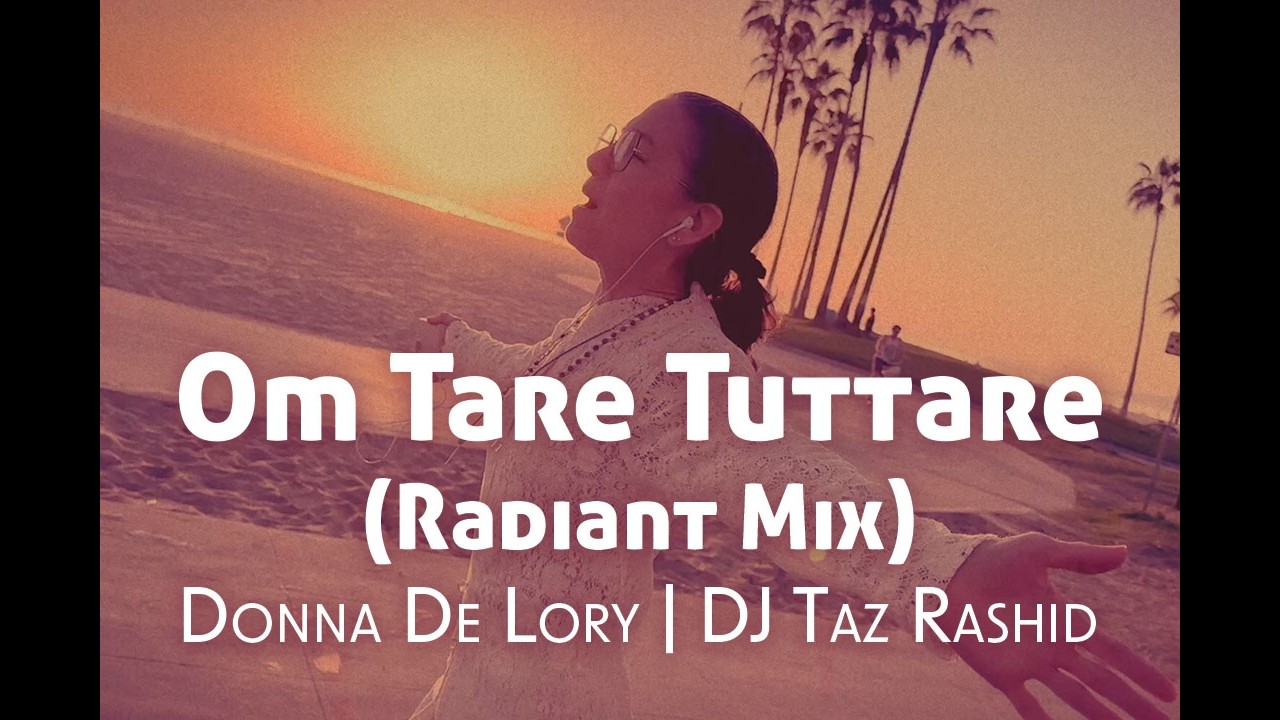
Om Tare Tuttare Mantra: DJ Taz Rashid's Radiant Remix
Featured

Om Tare Tuttare Mantra: DJ Taz Rashid's Radiant Remix

DJ Taz Rashid remixes the sacred "Om Tare Tuttare" mantra into a contemporary groove that centers spiritual practice within everyday urban l…

1 min read
Om Namah Shivaya & Thy Will Be Done: Sacred Mantra Meditation
Featured

Om Namah Shivaya & Thy Will Be Done: Sacred Mantra Meditation

A meditation mix blending the Sanskrit mantra Om Namah Shivaya with the Christian invocation Thy Will Be Done, featuring kirtan artist Donna…

1 min read
Lokah Samastah Sukhino Bhavantu: Sanskrit Prayer for Universal Happiness
Featured

Lokah Samastah Sukhino Bhavantu: Sanskrit Prayer for Universal Happiness

This acoustic rendition of the ancient Sanskrit mantra "Lokah Samastah Sukhino Bhavantu" expresses the prayer for universal well-being. A de…

1 min read
Glow: Sacred Light and Inner Radiance in Song
Featured

Glow: Sacred Light and Inner Radiance in Song

A lyric video exploring themes of inner light, divine presence, and spiritual awakening through contemplative songwriting.…

1 min read

Keep exploring

Continue your journey

More wisdom and gatherings from across the BrightStar directory.

More Articles

Browse the full library of teachings, interviews, and guides.

Back to all articles →

Teachers & Artists

Explore the lineages, musicians, and guides of the conscious world.

Explore artists →

Find an Event

Kirtan, retreats, sound baths, breathwork, festivals — happening soon.

Browse events →
Read more from BrightStarCreate Free Account
Host your own gatherings?Try the Demo