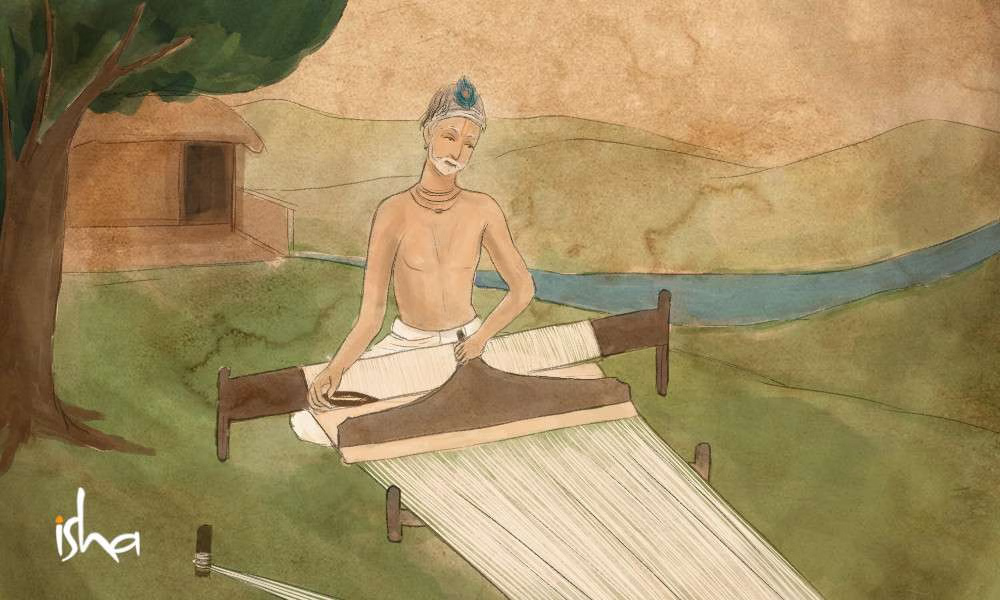
The Unseen Threads of Equality in the Divine Fabric
In the words of Kabir, "It is but folly to ask what the caste of a saint may be; the barber has sought God, the washerwoman, and the carpenter." This poignant statement challenges the deeply ingrained societal hierarchies that often dictate our perceptions of worth and spirituality. Kabir invites us to transcend these artificial divisions, suggesting that the divine is accessible to all, regardless of their social standing or profession. This message resonates profoundly in a world still grappling with issues of inequality and discrimination, urging us to reconsider our definitions of holiness and virtue.
As we delve deeper into Kabir's assertion, we uncover layers of meaning that speak to the heart of bhakti, the devotional path that emphasizes personal connection with the divine. The saintly figures he mentions—the barber, the washerwoman, and the carpenter—represent the marginalized and often overlooked members of society. By highlighting their spiritual pursuits, Kabir not only elevates their status but also dismantles the rigid caste system that has historically defined one's spiritual potential. This radical inclusivity serves as a reminder that the quest for God is not confined to the elite; rather, it is a universal journey that transcends social boundaries.
The image / the metaphor
The imagery in Kabir's quote is striking in its simplicity yet profound in its implications. By invoking the professions of a barber, a washerwoman, and a carpenter, Kabir paints a vivid picture of everyday life, grounding the spiritual quest in the mundane. Each profession, often associated with manual labor and deemed lowly by societal standards, becomes a vessel for divine seeking. The verbs "sought" and "may be" suggest an active pursuit of the divine, emphasizing that spirituality is not a passive state but a dynamic journey undertaken by individuals from all walks of life.
Diving deeper into the metaphor, we see that Kabir's choice of these specific professions serves to challenge our preconceived notions of who is worthy of divine grace. The barber, who shapes appearances; the washerwoman, who cleanses garments; and the carpenter, who constructs and repairs—each embodies a unique aspect of human experience and labor. By elevating these figures to the status of seekers, Kabir invites us to recognize that the divine can be found in the most ordinary of lives, urging us to look beyond superficial distinctions and to appreciate the sacredness inherent in all forms of existence.
In the speaker's tradition
Kabir's teachings are deeply rooted in the bhakti tradition, which emphasizes devotion and personal connection to the divine over ritualistic practices and caste distinctions. This movement arose as a response to the rigid social hierarchies of the time, promoting the idea that true spirituality is accessible to everyone, irrespective of their social status. Concepts such as dharma, or righteous duty, and kenosis, the act of self-emptying, resonate with Kabir's message, as they both encourage individuals to transcend ego and societal labels in their pursuit of the divine.
In the context of bhakti literature, Kabir's assertion echoes the sentiments found in the works of other saints, such as Mirabai and Tulsidas, who similarly emphasized the importance of devotion over caste. For instance, in the "Ramcharitmanas," Tulsidas illustrates that the love for God knows no boundaries, reinforcing the idea that the divine embraces all who seek it with sincerity. Kabir's words serve as a powerful reminder that the essence of spirituality lies not in one's social identity but in the purity of one's heart and intention.
Living the teaching
In our contemporary world, Kabir's teaching finds relevance in various scenarios, particularly in workplaces where hierarchies often dictate interactions and opportunities. Imagine a corporate environment where an executive overlooks the contributions of support staff, assuming that only those in leadership roles possess valuable insights. Kabir's message compels us to recognize the spiritual potential in every individual, encouraging us to listen to and learn from those whose voices are often marginalized. By fostering an inclusive atmosphere, we not only honor the divine within each person but also enrich our collective experience.
On a more personal level, consider a relationship where one partner feels superior due to their educational background or career achievements. This dynamic can create barriers to genuine connection and understanding. Kabir's wisdom invites us to dismantle these hierarchies, reminding us that love and respect should not be contingent upon status or accomplishments. By embracing humility and recognizing the inherent worth of our partners, we cultivate deeper, more meaningful relationships that reflect the equality espoused by Kabir.
A reflection
As we contemplate Kabir's profound assertion, we are invited to reflect on our own perceptions of worth and spirituality. How often do we unconsciously uphold societal divisions that separate us from recognizing the divine in others? In what ways can we actively seek to dismantle these barriers in our lives, fostering a sense of equality and connection with those around us? Let this contemplation guide us toward a deeper understanding of the sacredness that resides in every individual, urging us to embrace the beauty of our shared humanity.




Join the BrightStar Community
Stay connected with daily inspiration, event announcements, and community wisdom