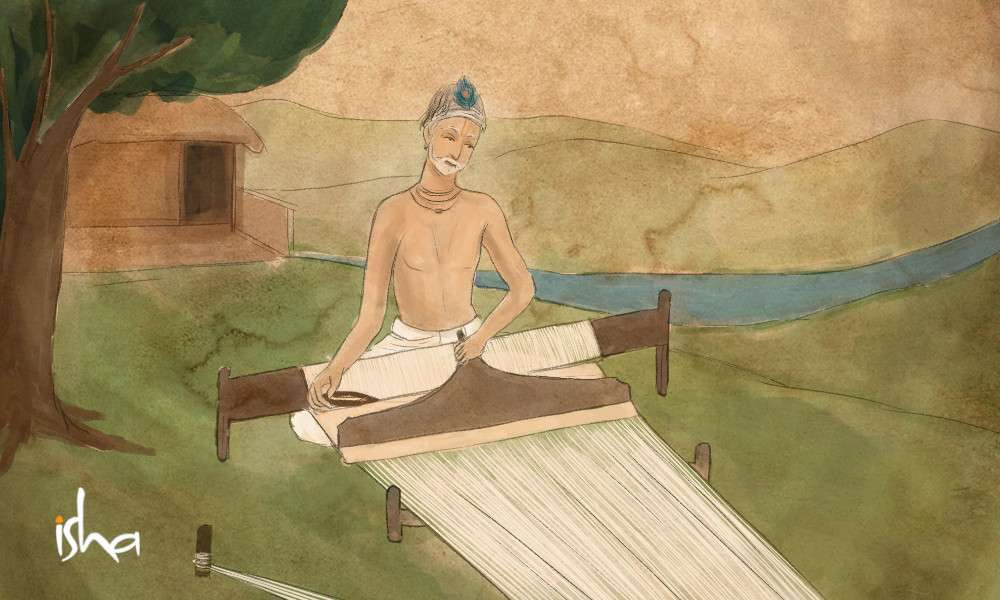
The Ocean Within: Embracing Our Wholeness
In the profound words of Kabir, "You are not a drop in the ocean. You are the entire ocean in a drop." This statement invites us to reconsider our perception of self and existence. It challenges the notion of individuality as mere separateness, urging us to recognize the vastness of our being contained within the smallest aspects of our lives. Understanding this truth is essential, as it opens the door to a deeper connection with ourselves and the universe, fostering a sense of unity and purpose.
As we delve into this quote, we uncover layers of meaning that resonate with the essence of consciousness and existence. Kabir, a 15th-century poet-saint, speaks to the heart of human experience, suggesting that our individual lives are not isolated fragments but rather integral parts of a greater whole. This perspective is not only liberating but also transformative, as it invites us to embrace our interconnectedness with all beings and the cosmos itself. In a world often marked by division and fragmentation, this teaching serves as a beacon of hope and understanding.
The image / the metaphor
The imagery in Kabir's quote is striking and evocative. The ocean symbolizes the vast, boundless nature of existence, while the drop represents each individual soul. The choice of words evokes a sense of fluidity and depth, suggesting that within each of us lies the entirety of the universe's wisdom and experience. This metaphor invites us to feel the weight of our significance; we are not merely insignificant specks in a vast sea but rather embodiments of the ocean's essence, rich with potential and depth.
In the speaker's tradition
To fully appreciate Kabir's insight, we must situate it within the rich tapestry of his spiritual tradition. Kabir's teachings emerge from a confluence of Hindu and Sufi thought, where concepts such as *bhakti* (devotion) and *fana* (the annihilation of the self in God) play pivotal roles. The idea of unity with the divine is central to both traditions, emphasizing that the individual self is an expression of the universal spirit. Kabir's assertion that we are the ocean in a drop aligns with the Hindu concept of *Brahman*, the ultimate reality that pervades all existence, suggesting that our true nature is divine and interconnected.
Moreover, Kabir's teachings echo the Buddhist notion of *sunyata*, or emptiness, which posits that the self is not a fixed entity but rather a dynamic interplay of experiences and consciousness. This aligns with the idea that recognizing our interconnectedness can lead to a profound understanding of the nature of reality. In the *Bijak*, Kabir often emphasizes the importance of direct experience over dogma, inviting seekers to explore their own consciousness and discover the truth of their existence as part of the greater whole.
Living the teaching
Consider a modern scenario where this teaching resonates: a person feeling overwhelmed by the pressures of daily life, believing their individual struggles are insignificant in the grand scheme of things. By reflecting on Kabir's words, they might begin to see that their experiences are not isolated but part of a larger narrative shared by countless others. This realization can foster compassion, not only for oneself but also for others who are navigating similar challenges. Embracing the idea that one's life is a microcosm of the universal experience can transform feelings of isolation into a sense of belonging.
In relationships, this teaching can manifest in profound ways. When conflicts arise, one might recall that each person involved is not merely an individual but a reflection of the larger human experience. This perspective encourages empathy and understanding, allowing for deeper connections and resolutions. By recognizing that we are all part of the same ocean, we can approach our interactions with a sense of unity, fostering harmony and compassion even in the face of disagreement.
A reflection
As we contemplate Kabir's profound insight, we are invited to ask ourselves: In what ways do I perceive myself as separate from the world around me? This question encourages introspection and invites us to explore the boundaries we create between ourselves and others. By reflecting on our interconnectedness, we can begin to dissolve these barriers, embracing the truth that we are, indeed, the entire ocean in a drop, rich with potential and deeply connected to the vastness of existence.



Join the BrightStar Community
Stay connected with daily inspiration, event announcements, and community wisdom