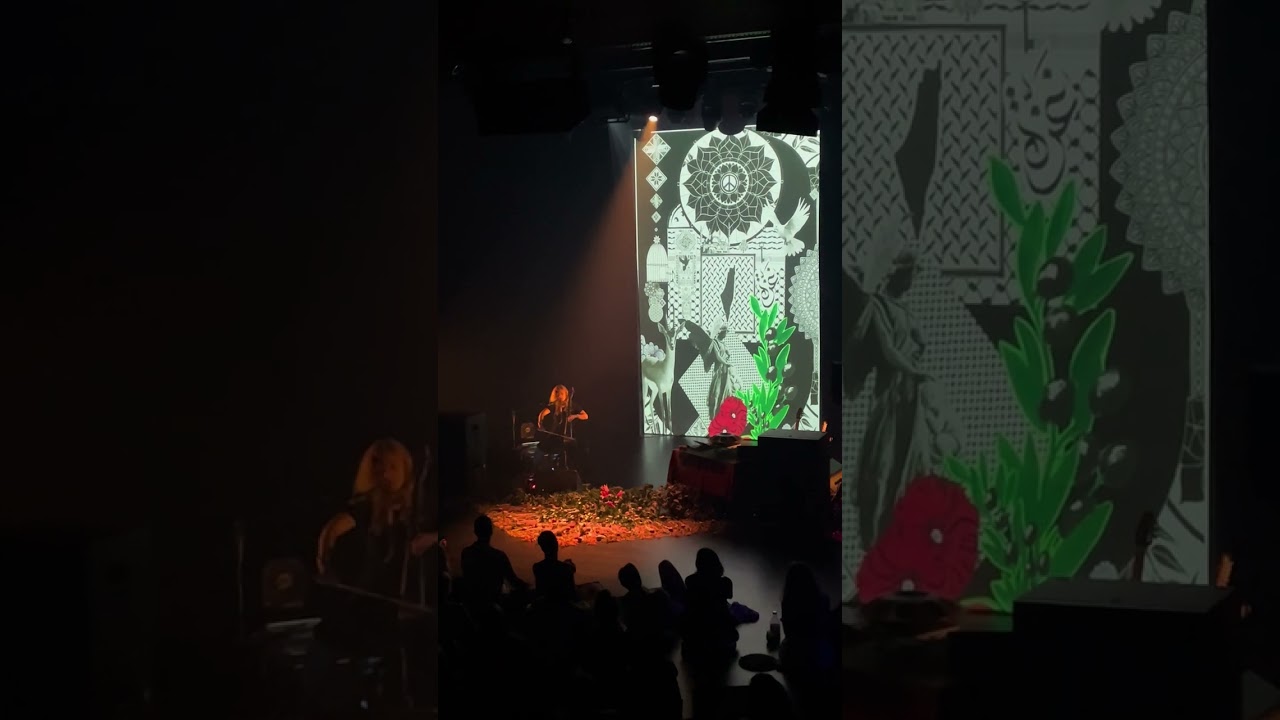
Shannon Hayden's "Void to Matter" is a live sound performance that explores the relationship between emptiness (void) and physical manifestation (matter). Presented at Ventura Music Hall, this work invites listeners to experience the bridge between non-dual consciousness and tangible, sensory reality through the medium of sound—examining how vibration, form, and silence interact as expressions of a unified field.
What Is the Void to Matter Performance?
"Void to Matter" is an exploratory sound work that takes as its central inquiry the relationship between nothingness and existence. The title itself signals a journey: from the void—often understood in contemplative traditions as emptiness, potential, or undifferentiated consciousness—toward matter, the manifest world of form, density, and sensory experience. Rather than presenting these as opposites, the work appears to investigate them as continuous points along a spectrum of being.
By presenting this as a live performance, Shannon Hayden engages the audience in a real-time experience of this inquiry. Sound, as a medium, proves ideal for this exploration: it begins as vibration—something felt before it's heard, something that emerges from silence and returns to it. In this sense, the performance itself becomes a demonstration of the void-to-matter principle, with each note and frequency emerging from and dissolving back into silence.
How Does Sound Reveal the Void-Matter Relationship?
Sound exists in a unique position between the invisible and the visible, the abstract and the concrete. A sound wave originates in vibration—movement so fast it produces frequency—yet it remains fundamentally immaterial until it reaches an ear and is converted into neural signals and conscious experience. This makes sound an ideal vehicle for exploring the boundary between void and matter.
In the context of contemplative and spiritual traditions, sound has long served as a bridge between states of consciousness. Mantra, chanting, and sonic meditation all operate on the principle that sound can attune consciousness to different frequencies of being. By extension, a performance like "Void to Matter" may be inviting listeners to use sound as a vehicle for investigating their own relationship to emptiness and form—to notice, in real time, how consciousness receives vibration and converts it into experience.
What Does a Live Venue Setting Contribute?
The choice to present "Void to Matter" live at Ventura Music Hall signals an intention to create a shared, embodied experience rather than a solitary one. A live performance space—with its specific acoustics, spatial dimensions, and gathered audience—becomes itself part of the work. The physical location, the presence of other listeners, and the unrepeatable nature of a live event all ground the audience in the present moment and in matter: in bodies, in space, in the tangible reality of being together.
This creates an interesting paradox: exploring the void through the most material of means—a room filled with people, the sound waves moving through air, the physical sensation of vibration in the body. There is no escaping matter while investigating emptiness in this format. Instead, the work seems to acknowledge that we cannot experience the void except through the doorway of matter and sensation.
How Might Listeners Engage With This Work?
For audiences unfamiliar with sound-based contemplative work, "Void to Matter" offers several layers of entry:
- As sensory experience: Simply listening to and feeling the sound waves, noticing how different frequencies and timbres affect the body and mind.
- As philosophical inquiry: Reflecting on the relationship between emptiness and form, nothingness and existence, silence and sound, as these appear in one's own experience.
- As meditation practice: Using the sound as an object of attention, observing how awareness responds to vibration, how thoughts arise and dissolve, how the boundary between self and sound becomes permeable.
- As artistic expression: Appreciating the composition, technique, and intentionality Shannon Hayden brings to the design of the sonic environment.
No single approach is required. The work's openness—suggested by its title's span from void to matter—invites each listener to meet it where they are and allow their own understanding to unfold.
Where Does This Fit in Contemporary Sonic Art?
In recent years, there has been growing interest in sound art and sonic meditation as vehicles for consciousness exploration. Artists and practitioners work with frequency, silence, resonance, and acoustic phenomena to create experiences that move beyond entertainment into the territory of inquiry and transformation. "Void to Matter" appears to participate in this broader movement, which includes kirtan artists, sound bathers, frequency healers, and experimental composers who approach sound as a technology for exploring states of being.
What distinguishes a work like this from purely aesthetic sound art is its explicit engagement with contemplative themes and non-dual philosophy. The title itself—"Void to Matter"—is not arbitrary decoration but rather a direct statement of intent: to use sound as a means of investigating a fundamental metaphysical question.
Where to Go From Here
If this work resonates with you, consider exploring other sound-based contemplative practices: kirtan and chanting traditions, sonic meditation, frequency therapy, or experimental works in the field of acoustic consciousness research. You might also deepen your own understanding of the void-matter relationship by studying non-dual philosophy, studying how different traditions understand emptiness and form, or by simply sitting in silence and observing how sound emerges from and returns to quiet.
For those interested in Shannon Hayden's broader work, researching their other performances and projects may reveal a consistent thread of inquiry into consciousness, vibration, and the nature of being expressed through sound.