EveryEvent Budapest

Ver todos os Events

Find every event in Budapest

events

Concerts & Live Music
Festivals
Sports & Recreation
Food & Drink
Arts & Culture
Community
Family & Kids
Nightlife
Comedy
Theater
Destinos populares
BaliSedonaLos AngelesCosta RicaNew YorkSan FranciscoAustinMiamiJoshua TreeTulum
Ver todas as categoriasVer todos os destinos

Explorar todos os recursos

Ferramentas poderosas para expandir seus eventos

Recursos da plataforma

Precificação dinâmica inteligente
Categorias de ingressos
Lugares marcados
Recuperação de carrinho abandonado
Recuperação de visitantes
Doações e preço variável
Sistema de afiliados
Scanner de ingressos
Códigos de desconto
Perguntas personalizadas
Compartilhamento de ingressos
Upsells e complementos
Análises e relatórios
Sequências de e-mail
Lista de espera / Notificar / Lembrar
Explorar
Discovery HubArtists & PerformersVenuesKnowledge Base
Ver todos os recursosSobre nós
PreçosBlog
Ver todos os eventos

events

Concerts & Live MusicFestivalsSports & RecreationFood & DrinkArts & CultureCommunityFamily & KidsNightlife

Destinos populares

BaliSedonaLos AngelesCosta RicaNew YorkSan Francisco

Explorar

Discovery HubArtists & PerformersVenuesKnowledge Base

Recursos da plataforma

Precificação dinâmica inteligenteCategorias de ingressosLugares marcadosRecuperação de carrinho abandonadoRecuperação de visitantesDoações e preço variávelSistema de afiliadosScanner de ingressosCódigos de descontoPerguntas personalizadasCompartilhamento de ingressosUpsells e complementosAnálises e relatóriosSequências de e-mailLista de espera / Notificar / Lembrar
Ver todos os recursosSobre nós
PreçosBlog
EntrarCadastrarOrganizadores de eventos
  • Browse All Events
  • Concerts & Live Music
  • Festivals
  • Sports & Recreation
  • Food & Drink
  • Arts & Culture
  • Community
  • Family & Kids
  • Nightlife
  • Todas as categorias →
  • All Destinations →
  • For Promoters
  • For Artists
  • For Venues
  • For Festivals
  • For Event Spaces
  • For Nonprofits
  • For Bloggers
  • For Speakers
  • Brand Ambassador
  • Case Studies
  • Rede de 350K+ compradores
  • Recuperação de carrinho abandonado
  • Precificação dinâmica inteligente
  • Categorias de ingressos
  • Eventos recorrentes
  • Lugares marcados
  • Sistema de afiliados
  • Lista de espera / Notificar
  • Scanner de ingressos
  • Widget incorporável
  • Event Syndication
  • Message Center
  • Integrations
  • Reports
  • Todos os recursos →
  • Sobre
  • The Ecosystem
  • Blog
  • Glossário
  • Inspiration
  • Central de ajuda
  • Contato
  • Documentação da API
  • Recursos da marca
  • Carreiras
  • Imprensa
  • Termos de Serviço
  • Política de Privacidade

Events

  • Browse All Events
  • Concerts & Live Music
  • Festivals
  • Sports & Recreation
  • Food & Drink
  • Arts & Culture
  • Community
  • Family & Kids
  • Nightlife
  • Todas as categorias →

Getaways

  • All Destinations →

For Organizers

  • For Promoters
  • For Artists
  • For Venues
  • For Festivals
  • For Event Spaces
  • For Nonprofits
  • For Bloggers
  • For Speakers
  • Brand Ambassador
  • Case Studies

Recursos

  • Rede de 350K+ compradores
  • Recuperação de carrinho abandonado
  • Precificação dinâmica inteligente
  • Categorias de ingressos
  • Eventos recorrentes
  • Lugares marcados
  • Sistema de afiliados
  • Lista de espera / Notificar
  • Scanner de ingressos
  • Widget incorporável
  • Event Syndication
  • Message Center
  • Integrations
  • Reports
  • Todos os recursos →

Empresa

  • Sobre
  • The Ecosystem
  • Blog
  • Glossário
  • Inspiration
  • Central de ajuda
  • Contato
  • Documentação da API
  • Recursos da marca
  • Carreiras
  • Imprensa
  • Termos de Serviço
  • Política de Privacidade
EveryEvent
© 2026 EveryEvent Budapest. Todos os direitos reservados.
Inspiration

Storm Boy Live: Homeland Magicand Stillness in Brussels

Xavier Rudd
Xavier Rudd
May 1, 2026
8 min read
Watch · 7

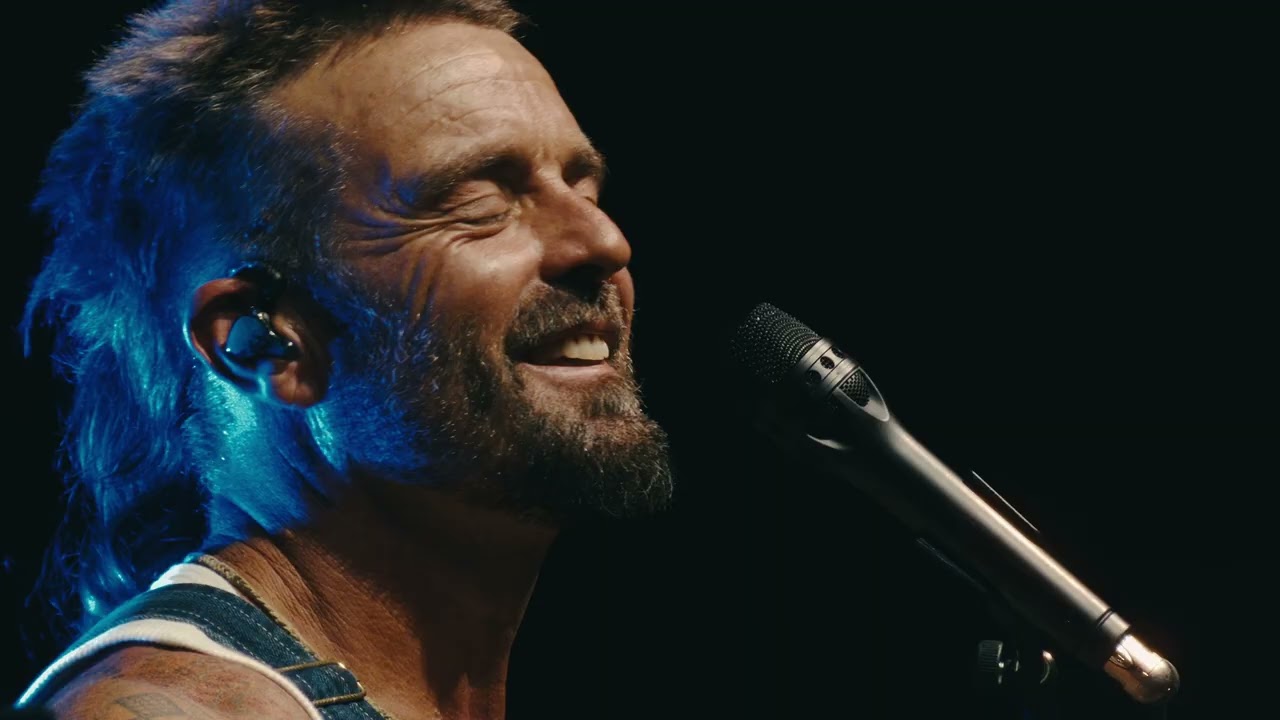
TLDR: At Forest National Arena in Belgium (November 2025), Xavier Rudd performs "Storm Boy," a song born by the river on Bunjalung country that explores the tension between material accumulation and inner freedom. Through imagery of Australian wildlife (kookaburras, pelicans, storm birds), the song maps a philosophy of stillness, contentment, and respect for country. It moves from personal reflection on taking and having, through celebration of connection with loved ones and the natural world, to explicit acknowledgment of Indigenous sovereignty and the sacrifice of those who came before. The live performance captures how this song has become a communal experience—an invitation to recognize the beauty already present.

Read · 8 sections

What does "taking more" really mean in the spiritual sense?

The opening lyrics of "Storm Boy" establish the song's central tension: "When will you learn that the more you take means the less that you'll have at the end of the day?" (110-114s) This is not a statement about material poverty, but about psychological and spiritual depletion. In Rudd's frame, "taking"—accumulating, grasping, always reaching for the next thing—creates a paradoxical loss. You end the day with less, not because resources are finite (though ecologically they are), but because the act of taking itself depletes presence and contentment.

The song does not offer moral judgment; it poses a question: "When will you learn?" This acknowledges that the lesson is not obvious. Most contemporary life is structured around taking more—more income, more possessions, more status, more experiences. Rudd's song asks whether this trajectory actually delivers what we're after. The answer comes in what follows: stillness, freedom of heart, and connection to place cannot be accumulated. They arise in the gaps when taking stops.

How does stillness become possible when the mind resists it?

The second layer of the song admits the difficulty: "Stillness the mind is so hard to embrace" (117-120s). This is not presented as a minor inconvenience but as a structural challenge. The mind, through evolution and conditioning, is wired to scan for threat, opportunity, and novelty. Asking the mind to be still is asking it to work against its default setting. Rudd does not bypass this difficulty; he names it directly.

What follows is the actual method—not through force, but through setting: "And we sit by the river with a cup of tea, watch the movement of the tide and the gentle breeze" (124-131s). Stillness is not manufactured in isolation; it arises from being placed in a context where movement is already happening—the tide, the breeze—and where the human role is to observe rather than direct. A cup of tea is part of this. The ritual of sitting, the warmth, the simplicity. These are not distractions from stillness; they are its vessels.

What is the significance of Storm Boy and the animal teachers?

The song introduces "Mr. Percival the Storm Bird" and the kookaburra as non-human witnesses and teachers. The pelican "drifting slowly, looking for a feed"—is moving through the landscape with economy and presence. The kookaburra "calls, just like he knows and I call right back. Yes, I'm home" (137-146s). These are not sentimental gestures toward nature. They are reports of reciprocal relationship.

The bird does not perform for the listener; the bird lives its life. The human recognizes something in that life—a kind of knowing, a belonging. When the kookaburra calls, it calls from a place of being home. When Rudd "calls right back," he is not imitating; he is answering. The birds appear in "Storm Boy" not as decoration but as models of how to live in a place—to move with purpose, to rest, to call out from a position of belonging. Storm Boy, the figure invoked by the song's title, is this kind of being: moved by wind and weather, rooted in country, at home even when the conditions are rough.

How does the song move from individual reflection to collective celebration?

The first verses are intimate—sitting by the river, hearing the kookaburra, recognizing home. By the chorus, the perspective shifts to plural: "Now everybody smiles in the setting sun and sighs with contentment when the day is done. Hand in hand with the ones you love, feeling blessed by the magic of the moon above" (152-169s). The song has moved the listener from "you will learn" to "everybody smiles." This is neither forced positivity nor fantasy; it is an invitation to notice what is already true when the taking stops.

The repeated refrain—"We're just living in this beautiful world" (175-184s)—is both observation and permission. It does not claim the world is perfect or without suffering. It claims that living itself, right now, is beautiful. The song does this not once but many times, building it into the body of those singing and listening until it becomes almost physical—a mantra that rewires the nervous system away from deficit and toward sufficiency.

What does the song say about respect, sovereignty, and intergenerational obligation?

Midway through, the song takes an explicit turn toward country and history: "Pay respect to the north, the south, the west, and the east. Pay respect to the spirit of this old country" (208-214s). This is not vague spiritualism. It is a specific directional practice—cardinal directions oriented toward the country (Bunjalung country, in Rudd's case) being sung in. Respect is a verb here, not a feeling.

The song then connects this to freedom and obligation: "freedom in the hearts of the young and brave who know little of the journey of the diggers who gave their lives to the service and the government gave so that we could dance together on this beautiful day" (215-229s). This acknowledges that the capacity to sing together, to gather, to be free in a physical place, has been enabled by sacrifice—specifically, the sacrifice of soldiers. The song does not shy away from historical cost. It honors it by naming it, and it suggests that the only appropriate response is to use that freedom: "so that we could dance together on this beautiful day."

This moment is crucial for understanding Rudd's project. "Storm Boy" is not escapist spirituality. It is grounded in place, in history, in the specific country where it was written. The beauty celebrated is not separate from the blood that bought entry to it. To truly sit by that river, to truly be home, requires acknowledging both.

What does "When the wind seeps into my bones" mean as a closing statement?

In the final movement, the song shifts into a different register: "When the wind just seeps into my bones and I hear the call from the north, I will go" (275-282s). This is not a closing affirmation of happiness. It is a statement of willingness to be moved. The wind is not metaphorical—it is actual wind, the real north calling from a real landscape. The "I will go" is a surrender to forces larger than individual preference or control.

This recalls the opening: the song began by asking "when will you learn?" Now it suggests the answer: when you stop resisting, when you let the wind seep into your bones, when you hear and answer the call. The song ends not in certainty but in readiness. The final chorus repeats again—everyone smiling, the beautiful world, the magic of the moon—but now it carries the weight of that willingness to be moved, to respond, to let go.

How does this live performance at 8,000 capacity create a different experience?

The description notes a sold-out crowd of 8,000 at Forest National Arena. Live performance of "Storm Boy" transforms it from recorded meditation into collective ritual. When thousands of people sing "We're just living in this beautiful world" together, the statement becomes something different. It is no longer an individual's philosophy; it becomes a temporary shared reality. The nervous systems in the room synchronize. The repetition of the refrain, especially across the chorus repeats visible in the transcript (multiple returns to the full chorus with audience participation cues), creates a kind of entrainment.

Rudd's own note about the song is telling: "STORMBOY has become a favourite for so many people and always brings the biggest smiles at shows when we sing it together. I remember vividly sitting by the river on Bunjalung country with a cuppa writing this song and it takes me back to that place every time I sing it." The song does not stop being personal; it expands. Each person in that arena brings their own river, their own country, their own beautiful world to the words. The song becomes a scaffold for individual experience while also creating collective permission to feel, right now, what is already here.

Where to go from here

If "Storm Boy" resonates, the practice it implies is simple but not easy: sit by water, if you can find it, or at least stop. Watch something move—the tide, the breeze, a bird. Notice what it is doing without trying to change it. Notice what happens to your sense of home when you do. Then, without forcing, see what ripples out when you hold that place and bring it forward into the rest of your day. The song is an invitation to test whether there is indeed less loss and more freedom in a life organized around presence than around accumulation. The 8,000 people singing together in Belgium suggest that when that test is run, the smiles are real.
Transcript

[0:04] Let's go.

[0:09] I'm going to take a little nap.

[0:15] I'm going to work.

[0:19] >> [cheering]

[0:25] >> I hope everybody enjoy.

[0:27] I'm going to work.

[0:31] >> [screaming]

[0:31] [cheering]

[0:33] [applause]

[0:54] [cheering]

[1:02] [cheering]

[1:03] [screaming]

[1:13] [cheering]

[1:20] [screaming]

[1:21] [cheering and music]

[1:21] [applause]

[1:50] >> When will you learn that the more

[1:52] [music] you take means the less that

[1:54] you'll have at the end of the day?

[1:57] Stillness the mind is so hard to

[2:00] embrace.

[2:01] Freedom [music] of the heart is what we

[2:04] crave. And we sit by the river with a

[2:07] cup of tea, [music] watch the movement

[2:09] of the tide and [singing] the gentle

[2:11] breeze.

[2:12] Pelican drifting slowly [music] looking

[2:14] for a feed, like Mr. Percival the Storm

[2:17] Bird. You to me,

[2:20] kookaburra [music]

[2:21] [singing] calls, just like he knows and

[2:23] I call right back.

[2:26] Yes, I'm home. He's been with me.

[2:29] >> [music]

[2:29] >> He's watched me grow through those rainy

[2:32] days and those rocky roads. Now

[2:35] everybody [music] smiles in the setting

[2:37] sun

[2:38] and sighs with [singing] contentment

[2:40] when the day is done.

[2:42] Hand in hand [music]

[2:44] with the ones you love, feeling blessed

[2:47] by the magic of the moon [singing]

[2:49] above. And we sing,

[2:51] la la la la la la la la la la.

[2:55] We're just living in this beautiful

[2:57] world.

[2:59] La la la la la la [music] la la la la.

[3:02] We're just [singing] living in this

[3:04] beautiful world.

[3:09] >> [music]

[3:13] >> And isn't it a beautiful world?

[3:16] >> [cheering]

[3:16] >> Look.

[3:20] It's time [music] for fire, smoke and

[3:23] leaves. Only mosquito repellent we need.

[3:28] Pay respect [music] to the north, the

[3:29] south, the west, and the east. Pay

[3:31] respect to the spirit of this old

[3:34] country [music and singing]

[3:35] and freedom in the hearts of the young

[3:38] and brave who know little [singing] of

[3:40] the journey of the diggers who gave

[3:42] their [music] lives to the service and

[3:45] the government gave so that we could

[3:47] dance together on this [music] beautiful

[3:49] day. Now everybody smiles in the setting

[3:53] sun and sighs with contentment [music]

[3:56] when the day is done.

[3:58] Hand in hand with the ones you love,

[4:01] feeling [music] blessed by the magic of

[4:04] the [singing] moon above and we sing

[4:08] >> [music]

[4:11] >> We're just living [singing] in this

[4:12] beautiful world.

[4:16] >> [music]

[4:18] >> We're just living in this beautiful

[4:21] world.

[4:30] >> [music]

[4:32] [singing]

[4:35] >> When the wind just seeps into [music] my

[4:38] bones and I hear the call from the

[4:42] north, I will go.

[4:44] >> [singing]

[4:46] >> I [music] will go.

[4:49] >> [singing]

[4:51] >> Now everybody smiles in the setting sun

[4:55] and sighs with contentment [music]

[4:57] when [singing] the day is done.

[4:59] Hand in hand with the ones you love,

[5:03] feeling blessed by the magic of the moon

[5:06] above and we sing [music]

[5:13] We're just living in this beautiful

[5:15] world.

[5:17] >> [music]

[5:20] >> We're just living in this beautiful

[5:22] [music] world. Let me hear you.

[5:27] >> [applause]

[5:29] [music]

[5:30] >> Hey!

[5:35] Hey! [music]

[5:43] We're just living in this beautiful

[5:46] world.

[5:48] Yeah

[5:51] We're just [music and singing] living in

[5:53] this beautiful world.

[5:56] >> [cheering]

[5:57] [screaming]

[6:01] [cheering]

Xavier Rudd
AuthorXavier Rudd

Watch more from Xavier Rudd on YouTube.

View profileWebsite
Explore Topics
Connection-to-placeStillness-mindIndigenous-sovereigntyContentmentWildlife-as-teacher

Got Questions?

Frequently Asked Questions

He's describing a spiritual and psychological principle: accumulating material goods, experiences, and status depletes presence and contentment rather than building them. Taking more leaves you with less inner freedom and peace, not just fewer resources.
These animals represent models of how to live in place with presence and belonging. They call from their home, move with purpose and economy, and have witnessed Rudd's growth. They're not decorative; they're relational teachers embedded in the Bunjalung country where the song was written.
Rudd suggests stillness doesn't come from forcing the mind to stop, but from placing yourself in a context where movement is already happening—sitting by a river, watching the tide and breeze. The human role becomes observing rather than controlling, which allows stillness to arise naturally.
The song explicitly honors both: it directs respect to the cardinal directions and 'the spirit of this old country,' then acknowledges the sacrifice of previous generations whose freedom and blood enabled the ability to gather and sing together today. Spirituality and historical acknowledgment are inseparable in this work.
When thousands sing 'We're just living in this beautiful world' together, it shifts from personal philosophy to collective experience and permission. The nervous systems synchronize, and each person brings their own place and history to the shared words, creating both individual and group ritual.
It's a statement of surrender and readiness—willingness to be moved by forces larger than personal preference. The wind and call from the north are real (actual weather and geography), and 'I will go' means responding without resistance to what is alive in the place itself.
It's grounded teaching, not escapist. It takes place in a specific country (Bunjalung land), honors historical cost and sacrifice, and invites direct practice—actually sitting by water, watching, noticing home. The beauty it celebrates is inseparable from the history and geography that make it real.

Continue Reading

More on Inspiration

View All
Music as Spirit Medicine: Touching Souls Through Sound
Featured

Music as Spirit Medicine: Touching Souls Through Sound

Xavier Rudd explores how music serves as a bridge to the spirit world, allowing us to access realms beyond words and touch the souls of othe…

1 min read
Let Me Be: Finding Freedom in Acts of Humanity
Featured

Let Me Be: Finding Freedom in Acts of Humanity

Xavier Rudd performs "Let Me Be," a song written after 9/11 to counter fear with joy, accompanied by 8000 Belgian fans in this live Forest N…

1 min read
Spirit Bird: Indigenous Lineage and Ancestral Resilience in Song
Featured

Spirit Bird: Indigenous Lineage and Ancestral Resilience in Song

Xavier Rudd performs "Spirit Bird," a song rooted in sacred Australian land that addresses cycles of dispossession, warrior spirit, and coll…

1 min read
Follow the Sun: Xavier Rudd's Live Performance in Verona
Featured

Follow the Sun: Xavier Rudd's Live Performance in Verona

Xavier Rudd performs "Follow the Sun" with Zucchero at Italy's ancient Verona amphitheatre, blending introspection with rhythmic storytellin…

1 min read

Keep exploring

Continue your journey

More wisdom and gatherings from across the BrightStar directory.

More Articles

Browse the full library of teachings, interviews, and guides.

Back to all articles →

Teachers & Artists

Explore the lineages, musicians, and guides of the conscious world.

Explore artists →

Find an Event

Kirtan, retreats, sound baths, breathwork, festivals — happening soon.

Browse events →
Read more from BrightStarCreate Free Account
Host your own gatherings?Try the Demo